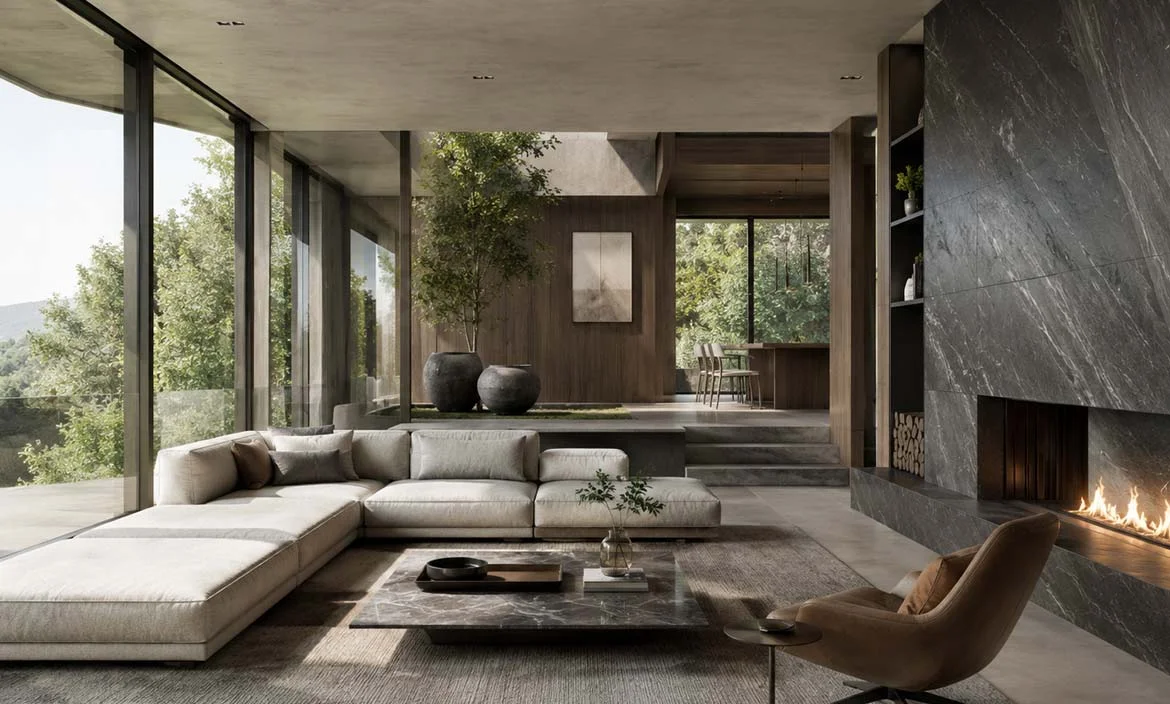
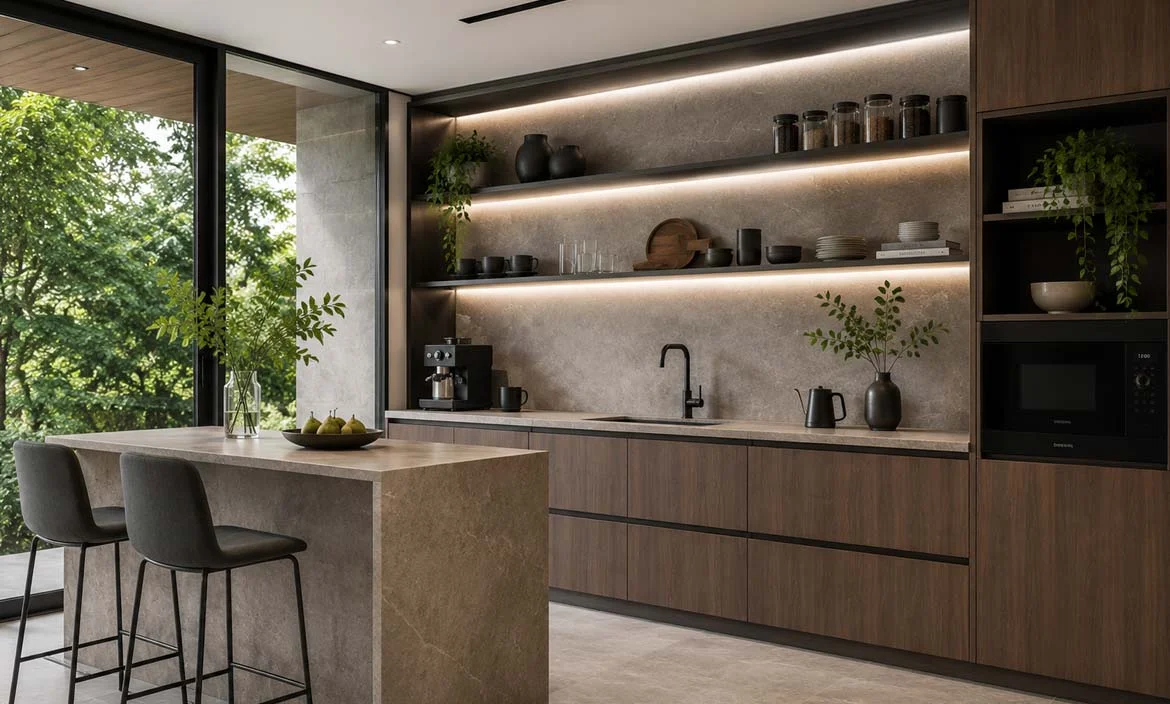
Interior design in 2023 moved towards spaces that feel more personal, flexible and connected to nature. Designers combined practical layouts, natural materials, expressive colours and technology to create interiors that support modern lifestyles while maintaining comfort and individuality.
DESIGN TRENDS
The leading interior trends of 2023 focused on creating adaptable, comfortable and visually distinctive spaces. Rather than following one fixed style, interiors became more responsive to the people who live, work and interact within them.
Natural materials and biophilic elements brought warmth and a stronger connection to nature.
Flexible layouts and multifunctional furniture helped spaces adapt to different activities.
Rich colours, curved forms and textured finishes added personality and visual depth.
Warm timber, natural stone, textured fabrics and indoor greenery became important elements in residential and commercial interiors. These materials helped soften modern spaces and introduced a sense of authenticity that highly polished finishes could not always provide.
Colour palettes also became more expressive. Earthy greens, warm terracotta, deep blue, burgundy and muted yellow were used alongside neutral backgrounds to create interiors with greater character. Curved furniture, rounded openings and sculptural lighting further softened straight architectural lines.
Flexible space planning became increasingly important as homes and workplaces needed to support multiple activities. Sliding partitions, modular seating, integrated storage and movable furniture allowed interiors to change according to different daily requirements.
Technology was also incorporated more discreetly through smart lighting, automated controls and integrated appliances. The strongest interior design trends of 2023 were not only about appearance—they focused on creating spaces that were practical, adaptable, comfortable and meaningful to the people using them.